


New Delhi [India], October 1: India’s atta aisle has started competing on a single number: how much protein.
But there is more to it.
Doctors Foodstore is launching a product that answers a bigger question: how good that protein actually is and how well it is helping your body.
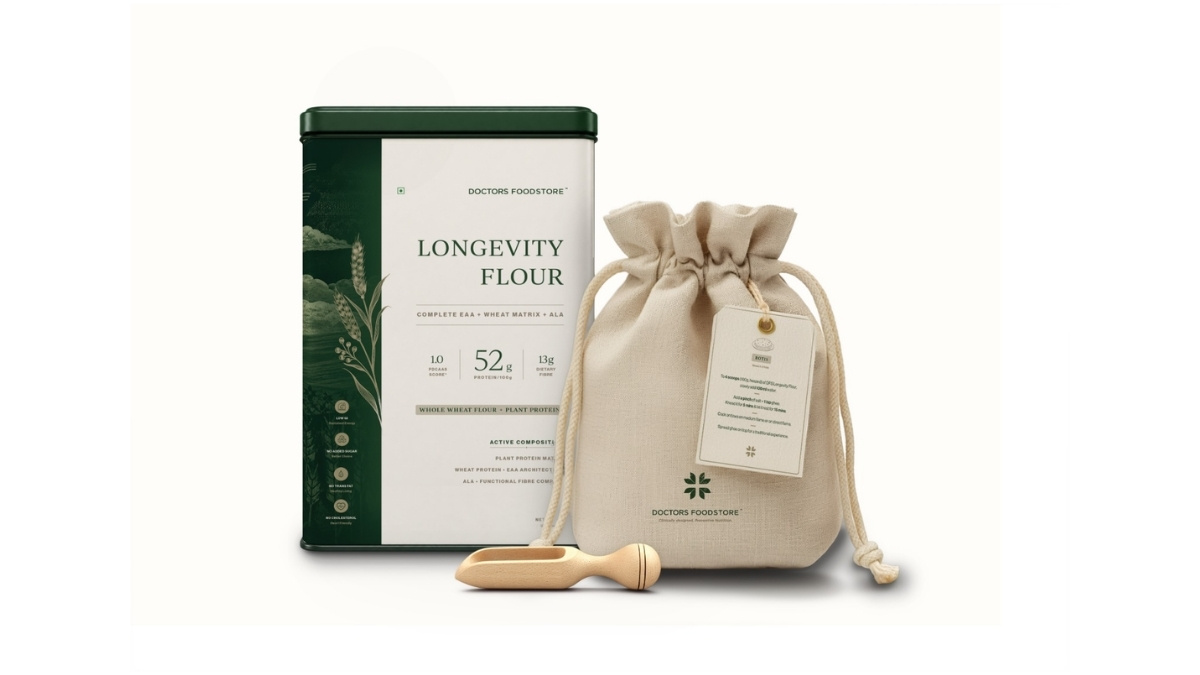
Longevity Flour, the company’s first product, is a clinically designed wheat flour formulated with a panel of practising doctors. It is built on the observation that the Indian plate is dense in refined carbohydrate and thin on the things associated with ageing well: high-quality protein, dietary fibre and plant-source fats. Roti is where most of that plate sits, eaten two or three times a day, every day.
PDCAAS, or Protein Digestibility Corrected Amino Acid Score, is the FAO/WHO method for evaluating protein quality. It combines a protein’s essential amino acid profile with how much of it the body can actually digest and absorb. A high protein number means little if the protein is incomplete or poorly absorbed. Most plant proteins score well below 1.00. Almost no Indian food brand publishes the figure at all.
Three levers, one roti
Protein quality, not just quantity: The flour contains 51.84 g of protein per 100 g, verified by TÜV India. More importantly, it publishes a PDCAAS score of 1.00, independently measured by NABL-accredited Equinox Labs, the highest value the scale permits. PDCAAS, the FAO/WHO method for evaluating protein quality, combines a protein’s essential amino acid profile with how much of it the body can actually digest and absorb. A high protein number means little if the protein is incomplete or poorly absorbed. Most plant proteins score well below 1.00, and almost no Indian food brand publishes the figure at all. It is, to the company’s knowledge, the first atta sold in India to print a PDCAAS score on its packaging.
Fibres: The flour carries 12.77 g of dietary fibre per 100 g, verified by Equinox Labs, largely from psyllium husk and flaxseed. Indian diets typically fall well short of fibre recommendations.
Fat quality: Flaxseed contributes plant-source omega-3 fat to a staple that usually contributes none.
A single 25 g scoop, roughly one roti, delivers close to 13 g of protein. It carries less than 1 g of added sugar and less than 0.10 g of trans fat.
Prevention includes what isn’t in the tin
Longevity is also about accumulated exposure, which is why the company tested for contaminants. Arsenic, cadmium, lead and mercury were all below the laboratory’s detection limit, well within FSSAI limits. Contamination testing is rarely disclosed to consumers in the Indian staples category, and Doctors Foodstore has chosen to publish those results alongside the nutritional ones.
Every tin carries a QR code linking to the complete reports for that specific batch: protein, amino acid profile, minerals, nutritional panel and contaminants, published in full rather than in summary. A printed Health Passport booklet inside each tin explains what each figure means and how it was measured.
Built around the everyday plate
The product is built on MP Sharbati wheat, prized in Indian kitchens for its softness and aroma, blended with vital wheat protein, pea protein, soya flour, flaxseed and psyllium husk. Each ingredient was selected for a specific function: pea protein supplies the lysine that wheat protein lacks, psyllium contributes soluble fibre and binds the dough without additives, and flaxseed adds plant-source fat quality.
The flour behaves like conventional atta. It is kneaded, rested and cooked on a tawa in the usual way, requiring no change to how a household already cooks. That matters for a longevity product, because the only dietary change that affects long-term health is one a household keeps up for years.
“Indians do not need another supplement. They need more from the food they already eat. We decided the only honest way to make that case was to test the finished product and publish everything, including the tests nobody asks us to run.”
— Abhishek Gupta, Founder, Doctors Foodstore
A category built on unverified claims
India’s packaged nutrition market has a documented credibility problem. Independent testing of protein products sold in the country has repeatedly found significant gaps between labelled and actual content, and consumer trust in health claims has suffered accordingly. Doctors Foodstore’s position is that transparency has to be structural rather than asserted: batch-level reports, published in full, checkable by anyone holding the tin.
Longevity Flour is available in a 1 kg tin supplied with a cloth pouch, a wooden measuring scoop and the GI certificate.
About Doctors Foodstore
Doctors Foodstore is an Indian preventive nutrition company building everyday staples formulated with practising doctors. Its products are developed around the principle that better health begins long before illness, and are independently laboratory tested at batch level, with results published for consumers to verify. The company’s philosophy rests on four pillars: Science, Nutrition, Prevention and Trust.
If you object to the content of this press release, please notify us at [email protected]. We will respond and rectify the situation within 24 hours.