

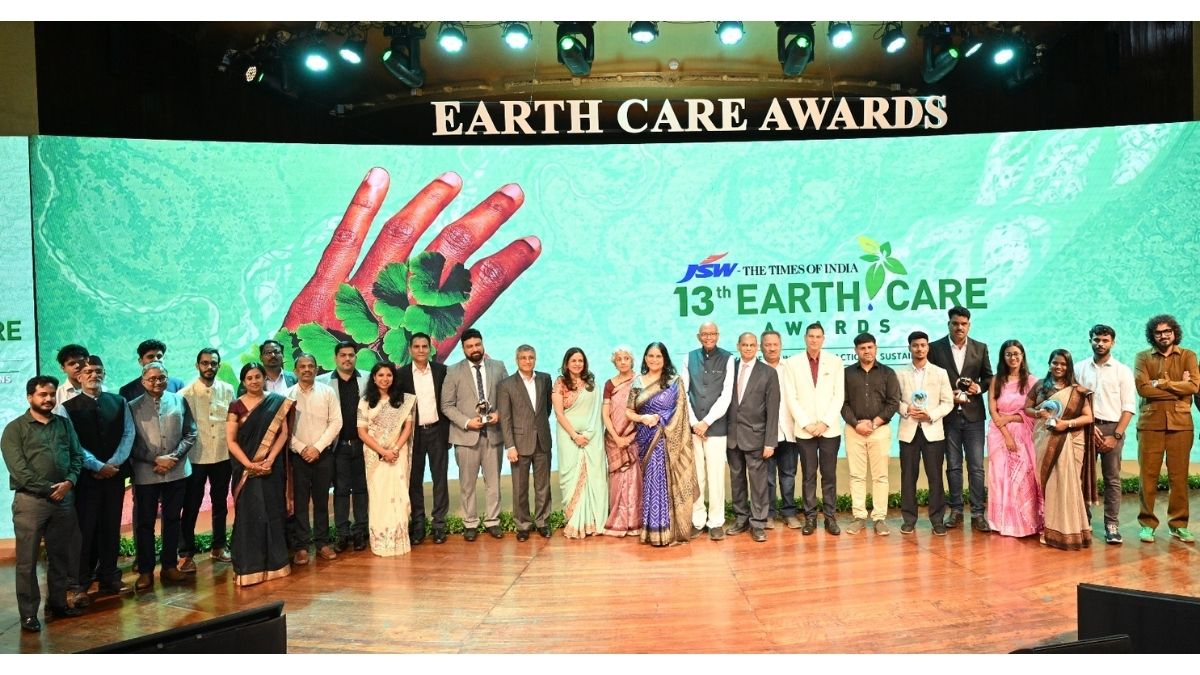
New Delhi [India], June 11: The Young Climate Champions Programme continued to grow its impact this year, reaching a wider network of climate-conscious youth across the country
As sustainability and environmental responsibility become central to conversations around India’s future, the youth are increasingly emerging as a powerful force in the country’s climate movement. With the world’s largest youth population and an average age of just 29 years, India is uniquely positioned to create a generation of climate-conscious citizens capable of driving meaningful change while contributing to the country’s economic growth and development.
Recognising this potential, the 13th edition of the Earth Care Awards expanded the Young Climate Champions Programme into its second edition after the encouraging response to its inaugural year. The programme engages with young minds through specially designed workshops conducted across colleges in India. Its core objective is to identify and recognise innovative climate solutions that can be implemented and replicated to create a positive impact on the environment and local communities.
This year, the initiative expanded significantly in scale and outreach, growing bigger than ever before. The movement reached across 25 states and three Union Territories, engaging more than 250 educational institutions nationwide. Through college connect initiatives, organisers worked to spread awareness about sustainability challenges and motivate students to participate in the Earth Care Awards.
Some of the esteemed institutions that were part of the initiative included Delhi Technical University, Delhi; St. Xavier’s College of Arts and Science, Kozhikode; NIT, Kozhikode; IIT, Gandhinagar; TISS, Guwahati; The National College, Bengaluru; IIT, Roorkee; Hansraj College, Delhi; IIT-BHU; IIT-Guwahati; IIM-Kozhikode; IIM-Udaipur; IIT-Delhi; St. Xavier’s College, Ranchi; Symbiosis College of Arts and Commerce, Pune, and many more.
The response this year reflected the growing interest among India’s youth in sustainability and environmental leadership. The jury received applications from 750 students and 250 institutions from across the country, highlighting the increasing participation of educational institutions in climate-focused initiatives.
The awards recognised contributions across six key categories. These included Air Quality Improvement and Pollution Control, Biodiversity and Ecosystem Restoration, Clean and Renewable Energy Solutions, Environmental Education and Public Engagement, Sustainable Waste Management and Circular Economy, and Water Stewardship and Resource Management.
Earth Day Network India was the outreach partner for the programme.
At a time when climate concerns are becoming increasingly urgent, the Young Climate Champions Programme is positioning India’s youth not merely as participants in sustainability efforts, but as future leaders capable of shaping a greener and more resilient future.
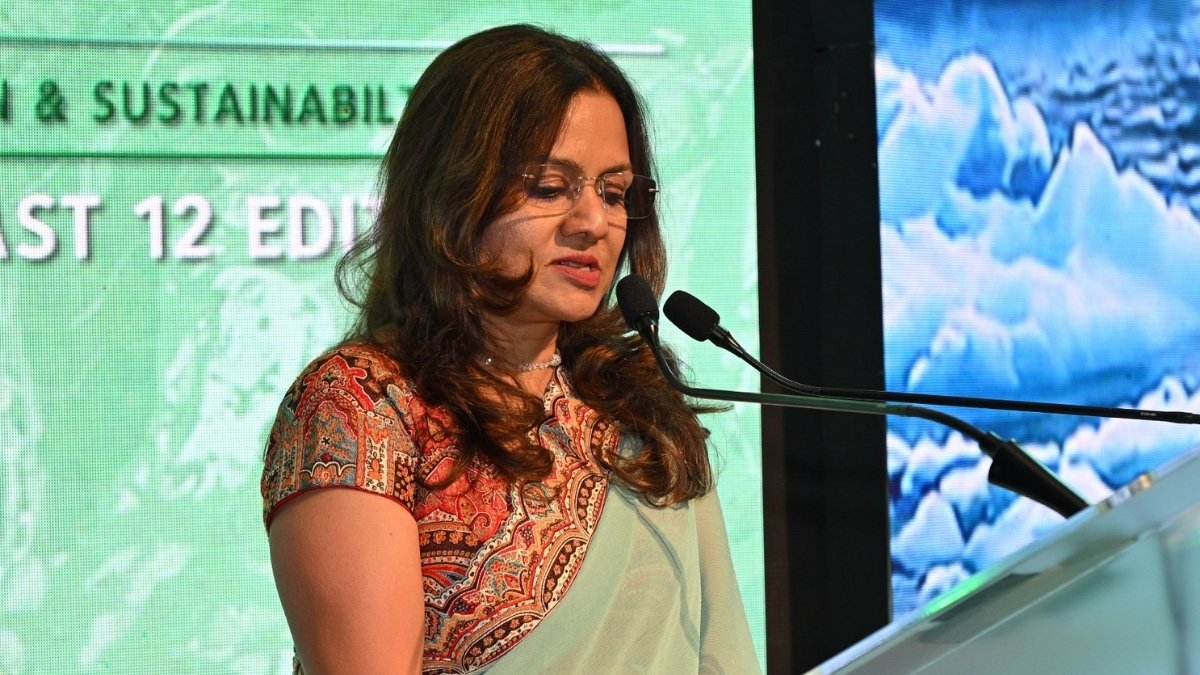
The climate is changing, and the evidence is impossible to ignore — in our weather patterns, our forests, our oceans, and in the difficult choices’ humanity is being forced to make. Yet, amid this crisis, there is hope. Across cities, villages, campuses and communities, ordinary people are stepping forward. Young women and men are not waiting for change; they are becoming the force driving it.
Sangita Jindal, Chairperson, JSW Foundation
Climate change is a reality that must be tackled through ideas, action and collaboration. Even Mumbai, due to its unique vulnerabilities as a dense coastal megacity faces rising sea levels, extreme rainfall, flooding and heat stress. Through the Mumbai Climate Action Plan, BMC is investing in climate-resilient infrastructure, sewage treatment, flood mitigation, green public transport, air-quality monitoring and renewable energy. But building a climate-resilient Mumbai requires collective responsibility from the government, institutions, businesses and citizens alike.
Ashwini Bhide, Municipal Commissioner, BMC
YCC Winners –https://youngclimatechampionsprogramme.earthcareawards.com/
YCC Winners 2026
Rajalakshmi Institute of Technology, Chennai
Category: Climate-Resilient Campus
Rajalakshmi Institute of Technology (RIT) was recognised for demonstrating outstanding institutional leadership in climate action through green infrastructure, renewable energy adoption, environmental education, youth engagement, sustainable mobility, and innovative campus-wide sustainability initiatives.
Rinku Pal, ABM COLLEGE
Category: Air Quality Improvement and Pollution Control
Rinku Pal was honoured due to his pioneering work through “Vayuveer Program”, a youth-led, community-driven initiative addressing waste management and indoor air pollution in informal settlements through hyperlocal climate action, clean cooking awareness, and sustainable urban climate resilience.
Jhansi Bhupendra Pulla
Pillai College of Arts, Commerce and Science
Category: Biodiversity and Ecosystem Restoration
Jhansi Bhupendra Pulla’s outstanding “Pollinator Highway” initiative presented an innovative biodiversity restoration model supporting climate resilience by creating safe ecological corridors for pollinators through native plantations, community participation, and low-cost sustainable design.
Arnav Garg
Indian Institute of Technology, Delhi
Category: Clean and Renewable Energy Solutions
Arnav was recognised for his AI-enabled Smart Grid Intelligence Platform that enhances renewable energy integration, optimises electricity demand forecasting, and advances efficient, sustainable power management for climate-ready energy systems.
Haridra Bora
Miranda House
Category: Environmental Education and Public Engagement
Haridra’s work on climate-sensitive health risk mapping integrates climate, environmental, and community data to strengthen early warning systems and improve resilience against mosquito-borne diseases impressed the jury.
Arpit Kumar
Manipal Academy of Higher Education
Category: Water Stewardship and Resource Management
Arpit’s innovation, MARU® powered by METAL®, was a breakthrough maintenance-free water purification technology enabling sustainable removal of arsenic and heavy metals through climate-neutral magnetic separation systems.
T.K. Devanarayanan National Institute of Technology, Calicut
Category: Sustainable Waste Management and Circular Economy
His proposed decentralised circular bio-refinery model transforms poultry and meat waste into biodiesel, bioplastics, biogas, and organic products, advancing climate-conscious zero-waste systems and sustainable resource recovery solutions got him the honour.
Programme Outreach
States covered
25 + 3 UTs
Outreach
4.5 Lakh+
Entries
750
students
250
institutions
Students participated
25,000
Sessions
200
Speakers
50
If you object to the content of this press release, please notify us at [email protected]. We will respond and rectify the situation within 24 hours.